When I first had an idea of writing a memoir, I wasn’t quite sure how I would tackle it.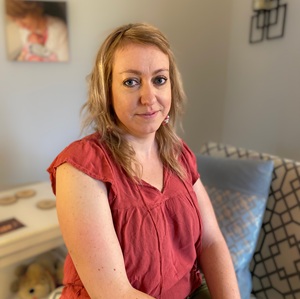 I knew I had to write about a specific time in my life, one that preferably had some level of interest or was formative in my life. And since I already had that idea, I knew I then had to figure out how to tell it. I did end up finishing that manuscript, but like many writers, it is one that resides unpublished on my hard drive. Getting through a book-length project was just the first step. Since that time, I have learned more about the craft of memoir and creative nonfiction writing. I have written another memoir that is vastly different from that first book, although I was able to revive bits of it for this new book. When I teach memoir writing in my community-based classes, I get a lot of questions about how to do it. Below are the biggest points I tell my students.
Read a Lot in the Genre
When I wrote the first manuscript all those years ago, I didn’t read a lot of memoirs. I didn’t realize how much we can learn about the craft of writing by reading what is already out there. Read good books and not-so-good ones, memoirs that are about similar topics as yours, and ones that are vastly different. The variety will show you possibilities of what can be done. Of course, you could never read enough to exhaust all the ways to tell a story, but hopefully you’ll pick up some great ideas to meld into your own book.
Choose a Container for Your Story
I often get asked what the difference between memoir and autobiography is, and my first answer is the amount of time covered. Memoirs should be time-limited: a moment in time, one event (or series of related events), or a number of years. It shouldn’t start at your birth (unless that is part of the time period important to your story) and run to the present day. Be selective and intentional. I once had a writing workshop mentor call this the container for your story. It allows you to let go of telling things outside of the container, even if you think it’s a great story. If it doesn’t fit, don’t include it. Save it for something else.
Try Writing in Vignettes
I found myself writing memories and events as individual essays. They each were self-contained pieces and once I had enough of them, I could connect them together to tell a bigger story. I also realized I didn’t have to reveal everything that happened during this time period – I could be selective and only use what was vital to the story.
This worked well for a couple of reasons:
1.) It made writing a whole book more manageable in these bite-sized pieces. It felt less overwhelming than sitting down to write a whole book.
2.) Playing with chronology gave me a freedom to move pieces like a jigsaw puzzle and created an interesting effect I never could have gotten from linear storytelling.
3.) Since the individual essays were self-contained stories in their own right, I could publish several of them in literary journals before selling the book as a whole. It made selling the book to a publisher easier as I could prove some of my writing had already been vouched for.
Play with Narrative Form
When I wrote my first manuscript, and then the second memoir, I started out writing events in standard, traditional prose. It was through reading many memoirs (see my first point!) and seeing how other writers in graduate school played with form that I realized you could do some really fun things. From hermit crab essays to lyrical essays, there are many ways form plays with the text in ways that words cannot do alone. Experimental prose may not be for everyone, but it is fun to have that option.
The Story You Are Telling Sizzles Underneath the Situation
Vivian Gornick wrote a book, The Situation and the Story, that forever changed how I viewed memoirs and creative nonfiction writing. A common misconception is that memoir is voyeuristic – it serves solely as a window for the reader to peer into your life. Or perhaps it’s more that the author wants the world to know something about their personal lives. In actuality, the events used to tell the story are the vehicle to tell a bigger story – the universal story – that allows readers to connect. It’s the reason why we do not have to know what it is like to have survived cancer or care for a loved one with Alzheimer’s Disease to feel connected to the author and invested in the story. Remember that the true story forms by connecting the plot points of your situation and seeing what bigger truth is there – maybe it’s about grief and loss, or persistence and determination, or coming of age, or resilience. We don’t intentionally write the bigger picture, but it’s always there. It’s our job as writers to identify it and play it up.
Often when I discuss these points with my students, I see a look of relief come over their faces. Many have gotten stuck by the idea of writing a whole book, or by sharing such personal things about their lives. But once they hear these tips, they find more freedom on their keyboards. Just as they helped me get my book off the ground, it can help break down the common walls others face as well.
Author Bio:
Laura Gaddis is a writer, book coach, and educator living in Oxford, Ohio. Her forthcoming memoir, Mosaic, comes out March 4, 2025 with Unsolicited Press. With a former career in clinical psychology, and more recently earning her MFA in creative writing from Miami University (of Ohio), she is interested in writing about the human condition, whether it be her own or that of others. Laura writes fiction and nonfiction that center around the idea that through storytelling we can connect humanity to profound levels, elevating us to be better for ourselves and for each other. Her writing has been nominated for a Pushcart Prize, and she has publications in literary nonfiction, poetry, and humor fiction in Thin Air Magazine, The Avalon Literary Review, Ligeia Magazine, Pif Magazine, Vita Brevis Press, The Dillydoun Review, Evening Street Review, 805 Lit + Art, Stonecoast Review, The Weekly Humorist and elsewhere. Additionally, she has published articles on parenting and mental health on the popular websites Scary Mommy, Tiny Buddha, and The Mighty.
More about Laura can be found at her website:
Social media:
https://www.instagram.com/lauragaddiswriter/
https://www.facebook.com/storysophia/
https://www.linkedin.com/in/laura-gaddis-writer/
If you like this blog post, you’ll love our Author Toolkit on writing nonfiction books. It includes checklists, templates, worksheets and more. Check it out!